Can you have a hair transplant in winter?
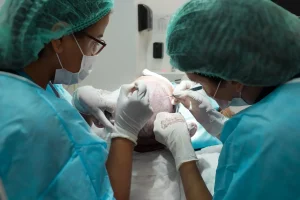
A hair transplant can be planned during winter when a clinician has confirmed that surgery is appropriate for you. The season alone is neither a contraindication nor a reason to expect a better result. Choose a date that fits your health, work commitments and ability to attend follow-up appointments.
The professional guidance used for this article does not establish that winter improves graft survival compared with summer. This is not a systematic review of every seasonal study; it is a clear limit on what we can responsibly claim. Surgery takes place in a controlled setting, and recovery arrangements should reflect the individual patient.
Start with the cause of hair loss. Not every form of alopecia is suitable for transplantation. Your clinician assesses the donor supply, scalp condition, future hair loss and the coverage you can realistically expect. Transplantation does not automatically stop thinning in the surrounding, non-transplanted hair. [1][2]
Practical benefits, practical limitations
For some people, winter makes it easier to arrange a quiet break without swimming, beach holidays or long periods outdoors. These are scheduling advantages, not evidence that wounds heal faster. If your work is busiest in winter or requires a safety helmet, the same season may make recovery more difficult.
Shorter days do not remove the need to discuss sun protection. Bright conditions, snow and a ski holiday need consideration too. Do not put sunscreen on an unhealed recipient area without approval. Any head covering used for protection must also avoid pressure or rubbing on the grafts.
Before choosing a date, ask whether you can follow instructions without rushing back to strenuous activity or relying on a tight hat to conceal the procedure. A manageable recovery window is more useful than a marketing claim about the ideal month.
Sapphire FUE and DHI: understand the terminology
FUE describes the removal of individual follicular units from a donor area. “Sapphire” generally refers to the material of a blade used to create recipient sites. DHI is used to describe implantation workflows involving an implanter; it does not specify a separate donor-harvesting method. Clinics may use these labels differently. [3]
Neither an instrument name nor the time of year removes the surgical nature of the procedure. With either approach, both the donor and recipient areas require protection, monitoring and prescribed care. Do not assume that DHI guarantees a shorter recovery, or that the absence of a linear FUE scar means no scarring at all.
Ask who will perform harvesting, recipient-site creation and implantation, how medical oversight works and what written instructions you will receive. Your surgeon sets the washing schedule, activity restrictions and review plan. Compare the proposed treatment for your own scalp rather than choosing by the name of a package alone.
Cold air, wind and indoor heating
Cold weather and indoor heating can make ordinary skin feel dry and irritated. This dermatological observation does not prove that cold air kills grafts, nor that it strengthens them. On a recently operated scalp, comfort, protection from injury and the prescribed care plan come first. [4]
Plan short transfers between buildings and transport, and avoid prolonged exposure to strong wind or severe cold. Do not direct a hot hairdryer, a heater or very hot water at the treated scalp. If your room feels uncomfortably dry, discuss a more comfortable environment; any humidifier needs regular cleaning.
Advice to use rich moisturisers on dry skin is not permission to apply them to fresh grafts. Use only products agreed with the team, in the quantities and with the technique you have been shown. Oils, fragranced preparations and improvised healing mixtures should not become additions to the plan without medical advice.
Do not scratch an itchy scalp or pick crusts. Ask which sensations are expected and when the team wants a photograph or an examination. If a product stings or irritates, report the reaction instead of repeatedly trying alternatives on healing skin.
When is it safe to wear a hat?
There is no single safe day for every patient and every hat. Graft position, skin healing, crusts, fit and the surgeon’s protocol all matter. Discuss an actual hat before travelling, ask to be shown how to put it on and remove it, and confirm permission at your review.
A study of graft anchoring found that early mechanical disturbance can dislodge grafts. Its findings should not be turned into a universal clearance date for all headwear: a small study did not test every fabric, fit or wearing condition. Never pull hairs or crusts to check whether your grafts are secure. [5]
Discuss a clean, roomy option that does not rub the recipient area or press on the donor area. A close-fitting knitted hat, tightly drawn hood or sports helmet needs separate approval. If no suitable option is permitted yet, arrange transport and brief outdoor transitions rather than improvising a covering.
Recovery is a sequence, not a deadline
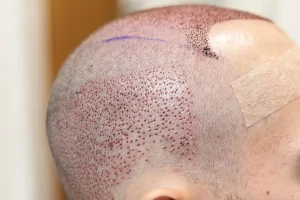
The first days are about protecting grafts, following prescribed care and staying in touch with the clinic. Tenderness, swelling, tightness and crusting can occur. Their severity varies, and the direction of change matters as much as the day on the calendar. Worsening symptoms should not simply be labelled normal healing. [6]
During the following weeks, your surgeon reviews healing and adjusts washing and activity advice. An internet calendar cannot replace your written instructions. Desk work, dusty work and work requiring a helmet present different demands; discuss each before arranging time off.
Transplanted hair shafts may shed in the weeks after surgery. This alone does not establish that the follicles have failed. New growth develops over months. AAD describes results for many patients at six to nine months, sometimes later; NHS information allows ten to eighteen months for full results. These are variable reference ranges, not a promised completion date. [1][2]
Agree on follow-up photographs taken in similar lighting and on review appointments. Daily mirror comparisons are rarely a useful measure of long-term progress. Concerns about density deserve discussion with your surgeon at the appropriate stage.
Exercise, sweating and both healing areas
Winter does not prevent sweating. A heated gym, an overheated car, several layers of clothing or rushing through an airport can all become uncomfortable. Strenuous activity can contribute to postoperative bleeding; your surgeon decides when to restart it. ASPS discusses restrictions over a period of weeks, but this is background information rather than your prescription. [7]
A gentle walk, weight training, swimming and contact sport are not interchangeable. Ask for clearance for each. A sauna or hammam is not an early-recovery treatment to improve graft circulation. Avoid rubbing sweat across the operated areas with a towel.
Remember the donor area too. Collars, pillows, scarves and headwear can create friction. Clothing that fastens at the front may make changing easier without passing fabric over the scalp. Ask for instructions on washing, sleeping and protecting both treated areas, rather than focusing only on the visible hairline.
A calm winter trip to Istanbul
Avoid combining surgery with a packed sightseeing itinerary. Before booking, establish the proposed review dates, washing appointment and return-travel plan. There is no universal permission to fly immediately after transplantation: your condition, journey length and medical risk factors need consideration.
Allow time for transfers and possible changes to your flight. Pack easy-opening clothing, approved care products, prescriptions and the team’s contact details. Arrange luggage so you do not have to lift a heavy case during early recovery.
CDC advises medical travellers to plan follow-up at home, obtain medical records and check cover for complications. Standard holiday insurance may exclude planned treatment. This advice concerns medical travel generally; the risks and timing of a flight after your particular transplant need an individual assessment. [8]
Report fever, acute illness or changes in regular medicines before travelling. Do not stop medication prescribed by another doctor to fit a surgical date without medical advice. Bring a list of conditions, allergies, medicines and supplements to the consultation.
Common mistakes worth avoiding
Do not pick scabs, add a new scalp product or alter prescribed medication because of a social-media recommendation. Keep written instructions in a language you understand, and establish how to contact the team outside normal hours.
Do not hide significant irritation under a hat or cover it with cosmetic hair fibres. Other patients’ photographs cannot predict your result: donor supply, hair loss and surgical planning differ. Keep a short record of symptoms and questions to make follow-up conversations more useful.
Before leaving, ask the team to demonstrate anything you do not understand. A workable plan explains what to do, when to seek help, who follows your recovery after you return home and where an in-person assessment can be arranged if needed.
Symptoms that need medical attention
Contact the surgical team promptly for increasing pain, spreading redness, hot skin, pus or unpleasant-smelling drainage, fever or unusual bleeding. A single sign does not diagnose a complication, but worsening symptoms require assessment. [9][10]
For heavy bleeding, breathing difficulty, chest pain, collapse or rapidly deteriorating health, seek local emergency care. Do not wait for a messaging reply or postpone care until you return to your own country.
Do not start an antibiotic or anti-inflammatory medicine on your own. Photographs can help communication with the clinic, but cannot replace an examination when one is needed.
Planning with Este in Turkey
Prepare scalp photographs, your hair-loss history and questions for an individual consultation. Ask whether surgery is appropriate, what alternatives exist and how the donor supply will be preserved. A decision about Sapphire FUE or a DHI implantation approach should follow medical assessment.
Discuss the responsible doctor’s qualifications, the proposed procedure, risks, included services and arrangements for complications. Ask about review appointments, winter aftercare and follow-up after travelling home. This article cannot confirm that you are suitable for surgery or replace that conversation.
Questions patients ask
Does winter improve graft survival?
The guidance used here does not justify promising higher survival because of the season. Choose a date around your medical plan and ability to follow aftercare.
Can I wear a hat immediately?
Only with individual approval. Healing and the particular hat’s pressure, friction and removal technique need assessment.
Does DHI mean an earlier return to sport?
The label does not set a safe date. Your surgeon considers the extent of surgery, healing and type of activity.
Should I moisturise fresh grafts in winter?
General dry-skin advice does not automatically apply to operated skin. Use only prescribed or approved products.
When can I fly home?
Discuss this before booking and confirm it after review. Your condition, journey, follow-up and individual risks matter.
Does shedding mean the procedure failed?
Hair-shaft shedding can be expected during recovery. Pain, discharge or other warning signs need medical assessment; results are evaluated later.
References and medical information
- NHS — Hair transplantation
- American Academy of Dermatology (AAD) — Suitability and results
- International Society of Hair Restoration Surgery (ISHRS) — Harvesting and implantation
- American Academy of Dermatology (AAD) — Cold weather and dry skin
- Bernstein & Rassman · Dermatologic Surgery, 2006 · PMID 16442039 — Graft anchoring: study limitations
- Cleveland Clinic — Recovery and risks
- American Society of Plastic Surgeons (ASPS) — Activity after surgery
- CDC · Yellow Book 2026 — Planning medical travel
- CDC — Infection warning signs
- UCLH NHS — Surgical wound infection symptoms
This is general information, not a diagnosis or a substitute for your treating clinician’s instructions. Your postoperative protocol, flying, headwear and medicines require individual medical advice. Medical review of this editorial version has not yet been confirmed.