

Hair Transplant
Sapphire FUE
Innovative technology with sapphire blades, minimal scarring, maximum density and results that are indistinguishable from natural hair.
What is FUE hair transplant?
FUE (Follicular Unit Extraction) hair transplant is a hair transplantation method that has been used since the early 2000s. It is one of the most widely adopted techniques, allowing healthy, strong follicles to be moved from the donor area into the area of hair loss.
Grafts are harvested one by one from the back of the head (the donor zone) using micro-motor punches with a diameter of 0.6–1 mm and transplanted into the thinning area. Each graft contains 2–3 hair follicles.
Despite its long history, the method has been refined many times. Thanks to extensive clinical practice, we now achieve successful and natural-looking results.
Benefits of sapphire blades
All the advantages
Stages of the Sapphire FUE procedure
The procedure takes 6–8 hours and is performed under local anesthesia in the comfort of our Istanbul clinic.
Video Testimonials
Frequently asked questions
The Sapphire FUE process includes the following steps:
- Initial consultation: the specialist listens to your goals, reviews your medical history and runs the required diagnostic tests.
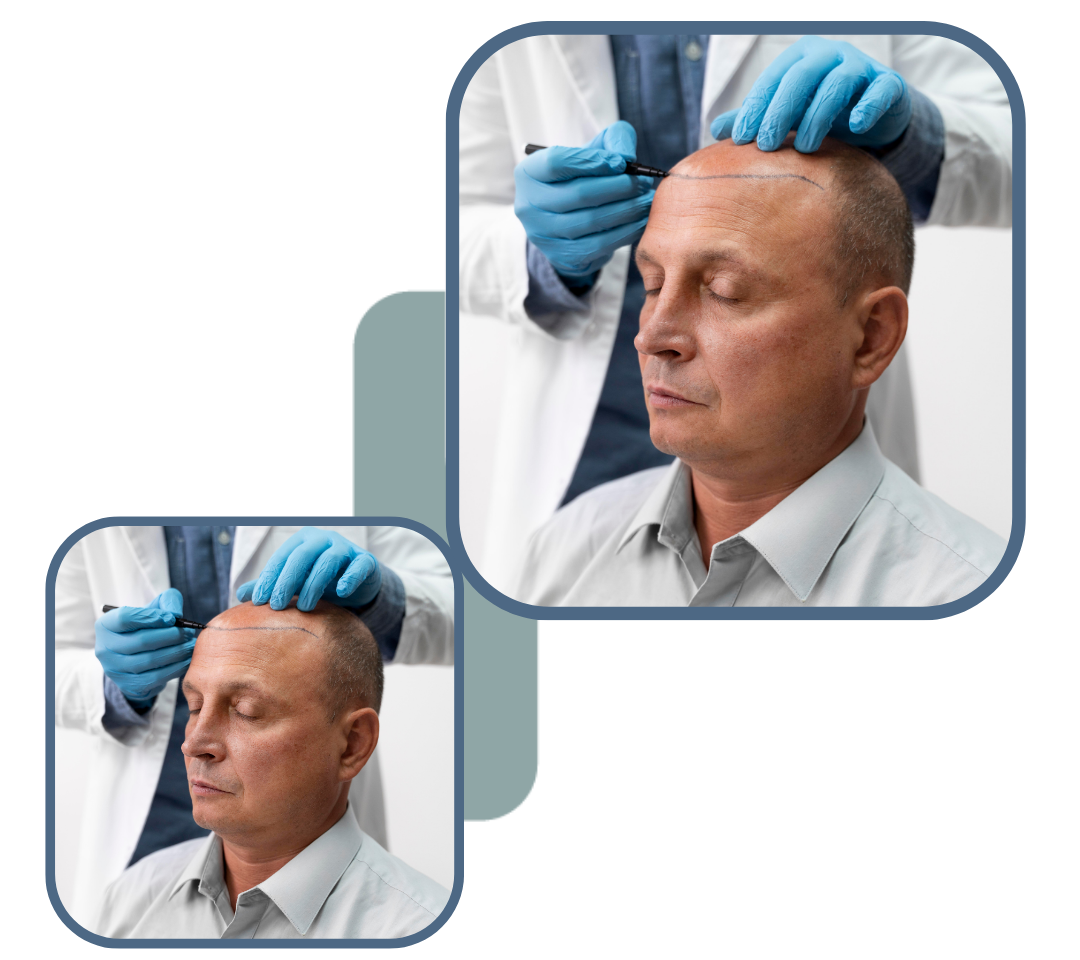
- Planning: the recipient area on the scalp is marked.
- The donor area is numbed with local anesthesia.
- Grafts are carefully extracted with a micro-motor and collected one by one with forceps using a homogeneous dissection method.
- The harvested grafts are stored in a special nutrient solution.
- Sapphire tips are used to open the micro-channels for graft implantation.
- Thanks to the asymmetric tip, channels are opened at the most suitable angle and depth, protecting the follicles under the skin from damage.
- In the final step, the specialists place the grafts into the micro-channels. This step takes about 3 hours; the full procedure lasts 6–8 hours.
After the procedure, a dressing is applied to the donor area. The next day the dressing is removed and the patient is prescribed antibiotics to prevent infection and painkillers to relieve mild discomfort.
Recovery is fast. By following all the doctor's recommendations, you can return to your normal life within 7–10 days.
Transplanted grafts usually take root within 8–10 days. During the first 10 days you must wash your hair daily as instructed.
After about 1 month, the grafts may shed — this is a normal shock-loss phase. New hair starts to grow in 3 months and gains volume by month 6. The final result is visible at 12 months.
With Sapphire FUE, hair follicles are harvested from the donor area using a homogeneous dissection method. No scars form in the harvest area.
Mild redness in the donor zone is normal for the first 7–10 days. After that, the area heals without scars.
Before the procedure, tell your doctor about any chronic conditions, medications you take and past surgeries. We also recommend taking 1 week off work.
Important:
- Tell the team if you take blood-thinning medications (e.g. aspirin).
- Do not take antidepressants, painkillers, vitamins E and B, or multivitamins before the procedure.
- Stop smoking and alcohol 7 days before the procedure.
- The transplanted area must be well protected for 10 days.
- The first hair wash is performed by our nurse at the clinic.
- Wash your hair daily for 10 days following the instructions.
- Do not scratch or rub your head for 15 days.
- Do not use a fabric towel or hair dryer for 1 month.
- Do not use hair dye or lotion for 1 month.
- Avoid direct sun, swimming pools and solariums for 1 month.
- Avoid heavy sports for 2 months.
- Do not shave the transplanted area with a razor for 6 months.
The method suits men and women without serious chronic conditions. Before the procedure, our specialists run the necessary checks and determine your type of hair loss.
If you can't visit the clinic, you can book an online consultation, send your photos and receive a personalized treatment plan from our coordinator.
The price depends on the number of grafts needed, the chosen technique and the desired density. The cost usually includes:
- Doctor consultation
- The procedure itself
- Anesthesia and medication
- City transfers
- Hotel accommodation
For an exact quote, fill in the form below or contact us directly.