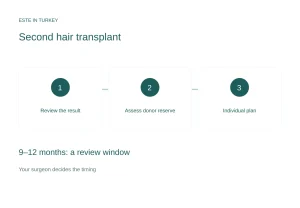

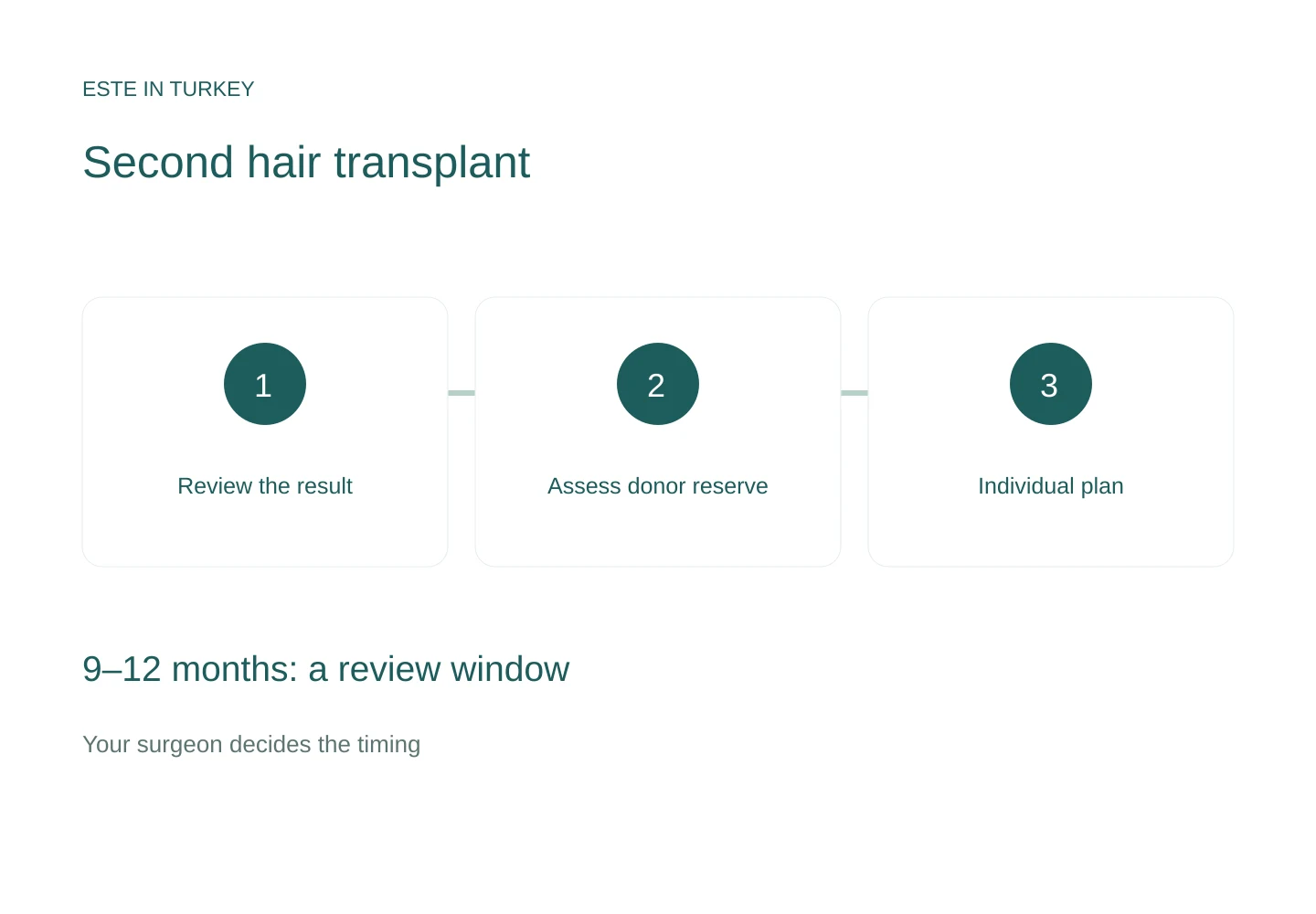
A second hair transplant can be a planned stage of treatment or an opportunity to address a specific concern after the first procedure. Wanting thicker coverage does not, however, establish that more surgery will be helpful or safe. The first questions are whether growth has matured, why an area looks thin and how much usable donor hair remains. Nine to twelve months is a useful review window, not automatic clearance for another operation.
Why one hair transplant may not be enough
With extensive hair loss, the first operation may prioritise the hairline and frontal scalp, leaving the crown for later consideration. This can be a deliberate sequence when the donor supply supports both stages. In that situation, an untreated crown does not itself indicate that the first operation failed. Its purpose should have been explained before surgery.
Our article on why more than 5,000 grafts in one session may be inappropriate explains the constraints of a large procedure. The next question is how to plan beyond it. Dividing treatment does not create new follicles or guarantee a second stage. The original proposal must be reassessed against actual growth, scalp health and the remaining supply.
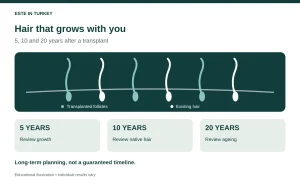
Existing hair outside the transplanted area can also continue to thin because of androgenetic alopecia. New gaps may appear years later even while transplanted hair remains. Other reasons for reassessment include an uneven transition, an unsatisfactory hairline or limited coverage in a particular area. These are different problems, so they do not all call for the same additional graft count.
How long should you wait before another procedure?
Understanding the 9–12 month interval
By this stage, the surgeon generally has more information about growth and distribution than in the early postoperative months. Nine months can be an appropriate assessment point rather than an operating date. When adding grafts to an already treated area, waiting until around twelve months often helps avoid mistaking developing growth for a permanent shortfall.
When a longer wait is sensible
The crown and some individual results may continue to mature for twelve to eighteen months. If hair is still thickening, the scalp is inflamed or the reason for poor growth remains unclear, further observation may be preferable. Timing also depends on whether the next operation will involve the same area. There is no universally safe minimum interval for every patient and procedure.
An earlier review is still important for symptoms. Increasing pain, discharge or deteriorating skin should be assessed promptly rather than left until the annual result appointment. Treating a complication and scheduling elective repeat surgery are separate decisions. Your clinician may investigate and manage a problem now while postponing any decision about additional grafts.
Assessing the first transplant properly
Compare photographs taken under similar lighting, at similar angles and with comparable hair length and styling. Wet hair, overhead light, concealing fibres and a different haircut can substantially alter the impression of density. Assessment considers coverage by region, hair calibre, direction and the naturalness of the hairline. One close-up photograph cannot establish the complete outcome.
Bring the first operation report if available, including the date, graft number, technique and areas treated. Trichoscopy can help examine miniaturisation, donor condition and signs of scalp disease. A reliable graft survival percentage cannot be calculated from two everyday photographs.
If growth is disappointing, the cause needs investigation before adding hair. Scalp disease, healing difficulties, injury, technical factors and expectations can all matter. Repeating an operation without understanding the problem may reproduce it. Sometimes the appropriate next step is treatment or observation rather than an immediate corrective procedure.
The donor area sets the limits
Healing does not replenish the donor supply
A follicular unit removed during FUE does not grow back in its original extraction site. Skin heals and neighbouring hair may conceal the small scars, but the harvested reserve is spent. A donor area that has recovered in appearance has not necessarily regained its original follicle count. That distinction is essential when discussing any further surgery.
The surgeon examines remaining density across different regions, hair diameter, miniaturisation, scarring and the pattern of previous extraction. The boundaries of a relatively stable donor area and the possibility of future thinning also matter. Longer hair can conceal reduced density, so a neat-looking back of the head is not proof that another large harvest is safe. Remote photographs provide only preliminary information.
Why another operation may be unsuitable
Marked depletion, diffuse donor thinning, active scarring alopecia, inflammation or relevant medical problems can make treatment inappropriate or require postponement. Occasionally the reserve supports a small improvement but not the coverage requested. The goal may need to change. Recognising that limit is safer than promising dense coverage at the expense of a visibly thinned donor area.
How the second set of grafts is allocated
The graft count follows examination and planning rather than subtraction from an assumed lifetime allowance. First agree the priority: frontal coverage, the transition to the mid-scalp, the crown or a particular corrective area. The plan should account for existing hair, surface area, growth direction and future loss. Extra grafts need not be divided equally between regions.
For example, a patient with an established frontal hairline and a thin crown might discuss modest crown coverage while preserving a reserve. This illustrates a planning choice, not a recommended number or guaranteed appearance. Hair diameter, curl, colour contrast and styling all influence visual coverage.
Beard hair may sometimes provide additional grafts, but its texture and growth characteristics differ from scalp hair. It is not equally suitable for every location and does not make the supply unlimited. Working among previous grafts requires careful placement to protect existing follicles. Scarred recipient skin can also require a more cautious strategy.
FUE, DHI and ongoing hair loss
FUE describes how follicular units are harvested, whereas DHI commonly refers to placing grafts with an implanter. They concern different stages and can be combined. A technique label does not determine suitability for repeat surgery, expand the donor reserve or guarantee that every existing hair will be preserved. The choice should follow your clinical needs.
Transplantation redistributes hair without automatically stopping androgenetic hair loss. Depending on the diagnosis, medical treatment may help maintain native hair. Our overview of minoxidil can help you prepare questions, but it is not suitable for everyone. Discuss side effects, contraindications and perioperative use rather than starting or stopping medicines independently.
Recovery and risks of a second transplant
Another session involves another recovery period; experience with the first does not make healing immediate. Swelling, scabs, tenderness and temporary shedding of hair shafts may occur. Our guide to healing after a hair transplant covers the general stages. Your surgeon should individualise washing, exercise, sleeping, sun protection and return to work according to the procedure and scalp condition.
Possible problems include bleeding, infection, visible scarring, lasting donor thinning, inadequate growth and injury to neighbouring follicles. Shock loss can affect existing hair, and heavily miniaturised hairs may not fully recover. Previous scarring can make outcomes less predictable. Tell the team about medicines, smoking, health conditions and problems after the first operation. Severe pain, fever or discharge needs prompt clinical contact.
Frequently asked questions
Does a second transplant mean the first failed?
No. It may be a planned stage or a response to later native hair loss. If the concern is poor growth within the first treatment area, that issue needs its own assessment. The number of procedures alone does not establish whether the original surgery met its agreed goal.
Can I book surgery exactly nine months later?
You can arrange a review, but a date should not be confirmed solely because nine months have passed. Growth, scalp health and donor supply must be checked. Continued maturation, especially at the crown, can justify waiting longer before deciding whether more surgery is needed.
Will the second session be as large as the first?
Not necessarily. Some patients need a limited correction; others are considering a separate coverage stage. The remaining donor supply and the goal determine the safe scope. The original graft count is not permission to harvest the same amount again after a year.
Can new grafts be placed between existing hairs?
Sometimes, if the patient and recipient area are suitable. Direction, spacing and protection of existing follicles require careful planning. If previously transplanted hair is still maturing, observation may be more useful than adding grafts immediately. No technique removes the possibility of damage or shock loss.
What if a surgeon advises against further surgery?
Ask whether the reason is temporary or reflects a lasting donor limitation. Options may include treating ongoing loss, styling changes, cosmetic camouflage or a hair system. An independent in-person opinion can help clarify the assessment, but a promise of unlimited grafts does not resolve the underlying limitation.
Discuss your next step with Este in Turkey
Our hair transplantation page explains the wider service. For an individual assessment, contact Este in Turkey with your operation date, available records and photographs from the front, top, back and sides. Remote advice is preliminary; an examination is needed to confirm suitability, timing and scope. This information does not replace medical advice. No specific density, graft survival or need for a second session can be guaranteed in advance.